Thursday, February 4, 2010

February 4, 2010


Love him or hate him, it was this day in 1969 that Yasser Arafat took over the Palestine Liberation Organization.
 
Mohammed Abdel-Raouf Arafat As Qudwa al-Hussaeini was born on 24 August 1929 in Cairo, his father a textile merchant who was a Palestinian with some Egyptian ancestry, his mother from an old Palestinian family in Jerusalem. She died when Yasir, as he was called, was five years old, and he was sent to live with his maternal uncle in Jerusalem, the capital of the British Mandate of Palestine. He has revealed little about his childhood, but one of his earliest memories is of British soldiers breaking into his uncle's house after midnight, beating members of the family and smashing furniture.
After four years in Jerusalem, his father brought him back to Cairo, where an older sister took care of him and his siblings. Arafat never mentions his father, who was not close to his children. Arafat did not attend his father's funeral in 1952.

In Cairo, before he was seventeen Arafat was smuggling arms to Palestine to be used against the British and the Jews. At nineteen, during the war between the Jews and the Arab states, Arafat left his studies at the University of Faud I (later Cairo University) to fight against the Jews in the Gaza area. The defeat of the Arabs and the establishment of the state of Israel left him in such despair that he applied for a visa to study at the University of Texas. Recovering his spirits and retaining his dream of an independent Palestinian homeland, he returned to Faud University to major in engineering but spent most of his time as leader of the Palestinian students.

He did manage to get his degree in 1956, worked briefly in Egypt, then resettled in Kuwait, first being employed in the department of public works, next successfully running his own contracting firm. He spent all his spare time in political activities, to which he contributed most of the profits. In 1958 he and his friends founded Al-Fatah, an underground network of secret cells, which in 1959 began to publish a magazine advocating armed struggle against Israel. At the end of 1964 Arafat left Kuwait to become a full-time revolutionary, organising Fatah raids into Israel from Jordan.

Wednesday, February 3, 2010

February 3, 2010


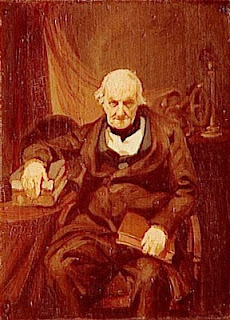
Jean-Baptiste Biot was educated at the college of Louis-le-grand in Paris, then after graduating he joined the army in 1793. He was then a pupil at the École Polytechnique in Paris where Monge realised his potential. There was an attempted insurrection by the royalists against the Convention and Biot took part. He was captured by government forces and taken prisoner. Had it not been for Monge, who could not see someone with such talents remain in jail, or even die, pleading successfully for his release his promising career might have ended. He became Professor of Mathematics at the École Centrale at Beauvais in 1797. Three years later he became Professor of Mathematical Physics at the Collège de France, an appointment which was due to the influence of Laplace. 

In 1803 Biot was elected to the First Class of the Institute. Three years later he went with Arago to Spain to complete earlier work begun there on calculating the measure of the arc of the meridian. In 1809 Biot was appointed Professor of Physical Astronomy at the Faculty of Sciences. Biot studied a wide range of mathematical topics, mostly on the applied mathematics side. He made advances in astronomy, elasticity, electricity and magnetism, heat and optics on the applied side while, in pure mathematics, he also did important work in geometry. He collaborated with Arago on refractive properties of gases. 

Biot, together with Savart, discovered that the intensity of the magnetic field set up by a current flowing through a wire varies inversely with the distance from the wire. This is now known as Biot-Savart's Law and is fundamental to modern electromagnetic theory.For his work on the polarization of light passing through chemical solutions he was awarded the Rumford Medal of the Royal Society. Another of his important works was Mémoire sur la figure de la terre (1827) which describes the shape of the Earth. 


He tried twice for the post of Secretary to the Académie des Sciences and to improve his chances for election to this post he wrote Essai sur l'Histoire Générale des Sciences pendant la Révolution. However he lost out in 1822 to Fourier for this post, then again when Fourier died he applied only to lose to Arago.


Buy and download PC and Mac games
St Beuve says that Biot
was endowed to the highest degree with all the qualities of curiosity, finesse, penetration, precision, ingenious analysis, method, clarity, in short with all the essential and secondary qualities, bar one, genius, in the sense of originality and invention.
A contrasting comment by Olinthus Gregory in 1821 is:
With regard to M. Biot, I had an opportunity of pretty fully appreciating his character when we were together in the Zetland [= Shetland] Isles; and I do not hesitate to say that I never met so strange a compound of vanity, impetuosity, fickleness, and natural partiality, as is exhibited in his character.

Tuesday, February 2, 2010


The First Court
The Supreme Court was first called to assemble on Feb. 1, 1790, in the Merchants Exchange Building in New York City, then the Nation's Capital. The first Supreme Court was made up of:
Chief Justice:
John Jay, from New York
Associate Justices:
John Rutledge, from South Carolina
William Cushing, from Massachusetts
James Wilson, from Pennsylvania
John Blair, from Virginia
James Iredell, from North Carolina
Other than establishing it, Article III of the U.S. Constitution spells out neither the specific duties, powers nor organization of the Supreme Court.
"[t]he judicial Power of the United States, shall be vested in one Supreme Court, and in such inferior Courts as the Congress may from time to time ordain and establish."
Instead, the Constitution left it to Congress and to the Justices of the Court itself to develop the authorities and operations of the entire Judicial Branch of government.

BUY Dragon Age Origins for PC

The very first bill introduced in the United States Senate was the Judiciary Act of 1789. It divided the country in 13 judicial districts, which were further organized into the Eastern, Middle, and Southern "circuits." The 1789 Act called for the Supreme Court to consist of a Chief Justice and only five Associate Justices, and for the Court to meet, or "sit" in the Nation's Capital.

In 1791, the Court joined Congress and the President in Philadelphia; it heard discussions of lawyers' qualifications but little else. Still, other duties exhausted the Justices. The Judiciary Act of 1789 required them to journey twice a year to distant parts of the country and preside over circuit courts. For decades they would grumble, and hope Congress would change this system; but Congress meant to keep them aware of local opinion and state law.

Stagecoaches jolted the Justices from city to city. Sometimes they spent 19 hours a day on the road. North of Boston and in the South, roads turned into trails. Justice Iredell, struggling around the Carolinas and Georgia on circuit, and hurrying to Philadelphia twice a year as well, led the life of a traveling postboy. Finding his duties "in a degree intolerable," Jay almost resigned. Congress relented a little in 1793; one circuit trip a year would be enough.

Monday, February 1, 2010

February 1, 2010


Born out of a need for a national police force to implement the law in Canada’s newly acquired western territories, the Royal Canadian Mounted Police was established on February 1, 1920

The Roots of an Institution

In May 1873, the Parliament of Canada established a central police force. One hundred and fifty recruits were sent west to Manitoba. The new police force gradually acquired the name North-West Mounted Police (NWMP).

In July 1874, the 275 mounted police officers marched west, headed for southern Alberta, where American whisky traders were operating among the Aboriginal people. A permanent post was established at Fort Macleod, Alberta. Part of the remaining half of the Force was sent to Fort Edmonton and the rest returned east to Fort Pelly, Saskatchewan, which had been designated as headquarters.The following summer, Fort Calgary, on the Bow River in Alberta, and Fort Walsh, in Saskatchewan’s Cypress Hills, were established.
By 1885, the Force had grown to 1,000 men, but in 1896 its future was threatened by the newly elected Prime Minister, Sir Wilfrid Laurier, who decided to reduce and eventually disband the NWMP. Support for the Force in the west prevailed, and it gained new prominence policing the Klondike Gold Rush.
From 1905-16, the Force was contracted to police the provinces of Alberta and Saskatchewan. These contracts ended due to the provinces’ desire to create their own police forces.


Livedrive Simple, Secure Online Backup

Building a Legacy

In 1919, Parliament voted to merge the Force with the Dominion Police, a federal police force with jurisdiction in eastern Canada. When the legislation took effect on February 1, 1920, the name became the Royal Canadian Mounted Police, and headquarters was moved to Ottawa from Regina.
The RCMP returned to provincial policing with a new contract with Saskatchewan in 1928.
From 1932-38, the size of the RCMP nearly doubled, to 2,350, as it took over provincial policing in Alberta, Manitoba, New Brunswick, Nova Scotia and Prince Edward Island.
The years following World War II saw a continued expansion of the RCMP’s role as a provincial force. In 1950, it assumed responsibility for provincial policing in Newfoundland and absorbed the British Columbia provincial police.
Women were first accepted as uniformed members in 1974. The seventies also brought an expansion of responsibilities in areas such as airport policing, VIP security and drug enforcement.
Today, the RCMP’s scope of operations includes organized crime, terrorism, illicit drugs, economic crimes and offences that threaten the integrity of Canada’s national borders. The RCMP also protects VIPs, has jurisdiction in eight provinces and three territories and, through its National Police Services, offers resources to other Canadian law enforcement agencies.

Tuesday, January 26, 2010

January 26, 2010


Exactly 20 years after the First Fleet dropped anchor in Sydney Cove on 26 January 1788, Australia experienced its first, and only, military insurrection – the Rum Rebellion.  The revolt was perpetrated against William Bligh, fourth Governor of New South Wales and former Captain of HMS Bounty. The perpetrators were the influential officers of the NSW Corps – also known as the ‘Rum’ Corps because of their control of the colony’s ‘rum’ trade.  Under instruction to limit their power and restore and stabilize trade in the area, Bligh introduced reforms that threatened the officers’ activities and prestige. He clashed, too, with leading Sydney businessman John Macarthur, a former Corps officer, on a several issues.  Following Macarthur’s arrest, the Corps, led by Major George Johnston, marched on Government House, reputedly dragging the “tyrant” Bligh ignominiously from beneath a bed before confining him to house-arrest as unfit for office and held him prisoner pending the arrival of a new governor. 

RUM REBELLION - A STUDY OF THE OVERTHROW OF GOVERNOR BLIGH BY JOHN MACARTHUR AND THE NEW SOUTH WALES CORPS 

Bligh remained confined for over a year, until he finally agreed to set sail for England, but once aboard he turned back and attempted to resume control of Sydney. In 1809, the British government, recognizing the impasse between governor and military, recalled Bligh. Colonel Lachlin Macquarie, an able administrator, arrived take over as governor. The commandant was later found guilty of mutiny and the New South Wales Corps was broken up. Having informally heard arguments from both sides, the government authorities in England were not impressed by either Macarthur and Johnston's accusations against Bligh, or by Bligh's ill-tempered letters accusing key figures in the colony of unacceptable conduct. Johnston was court-martialed, found guilty and cashiered, the lowest penalty possible. He was then able to return as a free citizen to his estate, Annandale, in Sydney. Macarthur was not tried but was refused permission to return to NSW until 1817, since he would not admit his wrongdoing. Bligh's promotion to rear admiral was delayed until the end of Johnston's trial. Afterward it was backdated to 31 July 1810 and Bligh took up a position that had been kept for him. He continued his naval career in the Admiralty in unspectacular fashion and died in 1817.


Shop GuinnessWebstore.com - The Official Online St

Monday, January 25, 2010

January 25, 2010


It was on this day in 1787, that Daniel Shays, formerly a captain in Washington’s army, led a force of 1,200 irate western Massachusetts farmers in an assault on the Springfield, Mass., arsenal.

His ill-equipped, ill-trained force easily was repelled by state militia under the command of General Benjamin Lincoln, and he thereafter had to flee to Petersham where, on Feb. 4, he was soundly defeated. In essence, this ended the frontier protest movement known to history as Shays’ Rebellion.With a large bounty on his head, Shays managed to escape to Canada. However, he soon returned to the U.S., fully convinced that his insurgency was warranted and that he could obtain a pardon.
To his surprise, he soon learned that he had been excluded from a general pardon and instead was sentenced to death by the Massachusetts Supreme Court. However, his personal petition for a pardon finally was granted and he thereafter settled in Sparta, N.Y., where he died in 1825.

Born into extreme poverty, Shays had overcome his impoverished upbringing to become a capable, well-respected military officer. He fought courageously in the battles of Lexington, Bunker Hill, Saratoga, and Stony Point. For his honorable military service, he eventually was granted a federal pension.
The frontier protest movement associated with the name of Daniel Shays was an armed revolt in Massachusetts against the constituted authority of the eastern-dominated state government. During the economic depression of the mid-1780s, the state government had passed a series of laws raising taxes and decreeing that all debts be paid in specie, making it extremely difficult if not impossible for impoverished farmers to avoid foreclosure.

In August 1786, the angry insurgents had forced the closing of several courts. In September, they forced the state Supreme Court to adjourn, thus preventing the further execution of foreclosures and debt processes. Clearly, this revolt had become a major challenge to constituted government and law and order.

Join Mixbook and receive FREE SHIPPING

Although the state government did in time manage to crush the rebellion, the insurgency had caused panic and outrage among conservatives. For example, Abigail Adams, no doubt reflecting the views of her husband John, declared in a letter to Jefferson that the insurgents were “ignorant, wrestless (sic) desperadoes” who “without conscience or principals” have staged a revolt “under pretence of grievances which have no existence but in their imaginations.”

The revolt also appeared to have persuaded many, including some of the delegates to the Constitutional Convention of 1787 meeting in Philadelphia, that it had become imperative to replace the weak Articles of Confederation government with a strong national government that could deal more swiftly and more resolutely with future political, social and economic unrest. The significant consequences of Shays’ rebellion soon were evident. The Massachusetts legislature quickly passed laws that postponed the imposition of new taxes and limited the liability of debtors, thus bringing much-needed relief to the insurgents. Also, the “scare” that the revolt created greatly strengthened the nationalistic movement of James Madison and Alexander Hamilton, a movement that led to the calling of the Constitutional Convention and the eventual creation of a strong national government.

Sunday, January 24, 2010

January 24, 2010


On 24 January AD 41, Caligula was assassinated as the result of a conspiracy involving officers of the Praetorian Guard as well as members of the Roman Senate and of the imperial court. The conspirators' attempt to use the opportunity to restore the Roman Republic was thwarted, as the same day the Praetorian Guard declared Caligula's uncle Claudius emperor in his place.

Caligula's father, Germanicus, the nephew and adopted son of emperor Tiberius, was a very successful general and one of Rome's most beloved public figures. The young Gaius earned his nickname Caligula (the diminutive form of caliga) meaning "little [soldier's] boot", while accompanying his father on military campaigns in Germania. When Germanicus died in Antioch in AD 19, his mother Agrippina the Elder returned to Rome with her six children, where she became entangled in an increasingly bitter feud with Tiberius. This conflict eventually led to the destruction of her family, with Caligula as the sole male survivor. Unscathed by the deadly intrigues, and seemingly unmoved by the fate of his closest relatives, Caligula accepted the invitation to join the emperor on the island of Capri in AD 31, where Tiberius himself had withdrawn in AD 26. At the death of Tiberius, on 16 March AD 37, Caligula succeeded his great-uncle and adoptive grandfather.

There are few surviving sources on Caligula's reign, and although he is described as a noble and moderate ruler during the first two years of his rule, after this the sources focus upon his cruelty, extravagance, and sexual perversity, presenting him as an insane tyrant. While the reliability of these sources has been difficult to assess, what is known is that during his brief reign, Caligula worked to increase the authority of the princeps, possibly contemplating the introduction of an authoritarian system of an eastern type. He directed much of his attention to ambitious construction projects, notoriously luxurious dwellings for himself, but also two new aqueducts for the city of Rome. However, these are primarily associated with his successor Claudius, who brought these projects to completion. Caligula also annexed Mauretania.