Showing posts with label this day in history. Show all posts

Sunday, May 27, 2012

May 27, 1831 - Jedediah Smith is killed by Commanche Indians on the Santa Fe Trail.


Jedediah Smith's was a trapper/explorer of the U.S. Far West, born on January 6, 1799. As with many mountain men of the time, Smith headed west as a businessman working for east coast fur companies. His goal was to find new territories to trap beaver and hunt buffalo, as well as to make trading contacts with Native Americans.  He made his first expedition in 1822 with the fur trader William Ashley, exploring the Missouri River then striking out west to the Rocky Mountains. Smith's travels provided information on western geography and potential trails that were invaluable to later pioneers. Smith's most important accomplishment may have been his rediscovery in 1824 of the South Pass, a natural crossing point through the Rockies. The first Anglo-Americans to cross the pass were fur traders heading east from an Astoria, Oregon trading post in 1812, yet despite their detailed journal being delivered to President Madison and being published in France, the route was not widely known. Smith’s passage helped establish the South Pass among fur trappers as an effective route. It wouldn’t be until the 1880’s that settlers would use the pass on their journey west, becoming an integral part of the Oregon Trail.
With a party of 83 men, Smith left St. Louis in early 1831 and headed south along the Cimarron River, a region known to be nearly devoid of potable water. Despite his years of wilderness experience, Smith was apparently overconfident in his ability to find water and did not take adequate supplies from St. Louis. By mid-May, the party's water supplies were almost exhausted, and the men started separating each day to search for waterholes. Smith was riding alone when he encountered a hunting party of Commanche Indians, who attacked him after a brief standoff. Dazed and weakened by lack of water, Smith still managed to shoot the Commanche chief before he was overwhelmed and killed.

Thursday, February 4, 2010

February 4, 2010


Love him or hate him, it was this day in 1969 that Yasser Arafat took over the Palestine Liberation Organization.
 
Mohammed Abdel-Raouf Arafat As Qudwa al-Hussaeini was born on 24 August 1929 in Cairo, his father a textile merchant who was a Palestinian with some Egyptian ancestry, his mother from an old Palestinian family in Jerusalem. She died when Yasir, as he was called, was five years old, and he was sent to live with his maternal uncle in Jerusalem, the capital of the British Mandate of Palestine. He has revealed little about his childhood, but one of his earliest memories is of British soldiers breaking into his uncle's house after midnight, beating members of the family and smashing furniture.
After four years in Jerusalem, his father brought him back to Cairo, where an older sister took care of him and his siblings. Arafat never mentions his father, who was not close to his children. Arafat did not attend his father's funeral in 1952.

In Cairo, before he was seventeen Arafat was smuggling arms to Palestine to be used against the British and the Jews. At nineteen, during the war between the Jews and the Arab states, Arafat left his studies at the University of Faud I (later Cairo University) to fight against the Jews in the Gaza area. The defeat of the Arabs and the establishment of the state of Israel left him in such despair that he applied for a visa to study at the University of Texas. Recovering his spirits and retaining his dream of an independent Palestinian homeland, he returned to Faud University to major in engineering but spent most of his time as leader of the Palestinian students.

He did manage to get his degree in 1956, worked briefly in Egypt, then resettled in Kuwait, first being employed in the department of public works, next successfully running his own contracting firm. He spent all his spare time in political activities, to which he contributed most of the profits. In 1958 he and his friends founded Al-Fatah, an underground network of secret cells, which in 1959 began to publish a magazine advocating armed struggle against Israel. At the end of 1964 Arafat left Kuwait to become a full-time revolutionary, organising Fatah raids into Israel from Jordan.

Tuesday, February 2, 2010


The First Court
The Supreme Court was first called to assemble on Feb. 1, 1790, in the Merchants Exchange Building in New York City, then the Nation's Capital. The first Supreme Court was made up of:
Chief Justice:
John Jay, from New York
Associate Justices:
John Rutledge, from South Carolina
William Cushing, from Massachusetts
James Wilson, from Pennsylvania
John Blair, from Virginia
James Iredell, from North Carolina
Other than establishing it, Article III of the U.S. Constitution spells out neither the specific duties, powers nor organization of the Supreme Court.
"[t]he judicial Power of the United States, shall be vested in one Supreme Court, and in such inferior Courts as the Congress may from time to time ordain and establish."
Instead, the Constitution left it to Congress and to the Justices of the Court itself to develop the authorities and operations of the entire Judicial Branch of government.

BUY Dragon Age Origins for PC

The very first bill introduced in the United States Senate was the Judiciary Act of 1789. It divided the country in 13 judicial districts, which were further organized into the Eastern, Middle, and Southern "circuits." The 1789 Act called for the Supreme Court to consist of a Chief Justice and only five Associate Justices, and for the Court to meet, or "sit" in the Nation's Capital.

In 1791, the Court joined Congress and the President in Philadelphia; it heard discussions of lawyers' qualifications but little else. Still, other duties exhausted the Justices. The Judiciary Act of 1789 required them to journey twice a year to distant parts of the country and preside over circuit courts. For decades they would grumble, and hope Congress would change this system; but Congress meant to keep them aware of local opinion and state law.

Stagecoaches jolted the Justices from city to city. Sometimes they spent 19 hours a day on the road. North of Boston and in the South, roads turned into trails. Justice Iredell, struggling around the Carolinas and Georgia on circuit, and hurrying to Philadelphia twice a year as well, led the life of a traveling postboy. Finding his duties "in a degree intolerable," Jay almost resigned. Congress relented a little in 1793; one circuit trip a year would be enough.

Tuesday, January 26, 2010

January 26, 2010


Exactly 20 years after the First Fleet dropped anchor in Sydney Cove on 26 January 1788, Australia experienced its first, and only, military insurrection – the Rum Rebellion.  The revolt was perpetrated against William Bligh, fourth Governor of New South Wales and former Captain of HMS Bounty. The perpetrators were the influential officers of the NSW Corps – also known as the ‘Rum’ Corps because of their control of the colony’s ‘rum’ trade.  Under instruction to limit their power and restore and stabilize trade in the area, Bligh introduced reforms that threatened the officers’ activities and prestige. He clashed, too, with leading Sydney businessman John Macarthur, a former Corps officer, on a several issues.  Following Macarthur’s arrest, the Corps, led by Major George Johnston, marched on Government House, reputedly dragging the “tyrant” Bligh ignominiously from beneath a bed before confining him to house-arrest as unfit for office and held him prisoner pending the arrival of a new governor. 

RUM REBELLION - A STUDY OF THE OVERTHROW OF GOVERNOR BLIGH BY JOHN MACARTHUR AND THE NEW SOUTH WALES CORPS 

Bligh remained confined for over a year, until he finally agreed to set sail for England, but once aboard he turned back and attempted to resume control of Sydney. In 1809, the British government, recognizing the impasse between governor and military, recalled Bligh. Colonel Lachlin Macquarie, an able administrator, arrived take over as governor. The commandant was later found guilty of mutiny and the New South Wales Corps was broken up. Having informally heard arguments from both sides, the government authorities in England were not impressed by either Macarthur and Johnston's accusations against Bligh, or by Bligh's ill-tempered letters accusing key figures in the colony of unacceptable conduct. Johnston was court-martialed, found guilty and cashiered, the lowest penalty possible. He was then able to return as a free citizen to his estate, Annandale, in Sydney. Macarthur was not tried but was refused permission to return to NSW until 1817, since he would not admit his wrongdoing. Bligh's promotion to rear admiral was delayed until the end of Johnston's trial. Afterward it was backdated to 31 July 1810 and Bligh took up a position that had been kept for him. He continued his naval career in the Admiralty in unspectacular fashion and died in 1817.


Shop GuinnessWebstore.com - The Official Online St

Sunday, January 24, 2010

January 24, 2010


On 24 January AD 41, Caligula was assassinated as the result of a conspiracy involving officers of the Praetorian Guard as well as members of the Roman Senate and of the imperial court. The conspirators' attempt to use the opportunity to restore the Roman Republic was thwarted, as the same day the Praetorian Guard declared Caligula's uncle Claudius emperor in his place.

Caligula's father, Germanicus, the nephew and adopted son of emperor Tiberius, was a very successful general and one of Rome's most beloved public figures. The young Gaius earned his nickname Caligula (the diminutive form of caliga) meaning "little [soldier's] boot", while accompanying his father on military campaigns in Germania. When Germanicus died in Antioch in AD 19, his mother Agrippina the Elder returned to Rome with her six children, where she became entangled in an increasingly bitter feud with Tiberius. This conflict eventually led to the destruction of her family, with Caligula as the sole male survivor. Unscathed by the deadly intrigues, and seemingly unmoved by the fate of his closest relatives, Caligula accepted the invitation to join the emperor on the island of Capri in AD 31, where Tiberius himself had withdrawn in AD 26. At the death of Tiberius, on 16 March AD 37, Caligula succeeded his great-uncle and adoptive grandfather.

There are few surviving sources on Caligula's reign, and although he is described as a noble and moderate ruler during the first two years of his rule, after this the sources focus upon his cruelty, extravagance, and sexual perversity, presenting him as an insane tyrant. While the reliability of these sources has been difficult to assess, what is known is that during his brief reign, Caligula worked to increase the authority of the princeps, possibly contemplating the introduction of an authoritarian system of an eastern type. He directed much of his attention to ambitious construction projects, notoriously luxurious dwellings for himself, but also two new aqueducts for the city of Rome. However, these are primarily associated with his successor Claudius, who brought these projects to completion. Caligula also annexed Mauretania.

Saturday, January 23, 2010

January 23, 2010


It was January 23, 1719, that the Holy Roman Emporer, Charles VI, announced the creation of a new principality, Liechtenstein, named in honor of "[his] true servant, Anton Florian of Liechtenstein." The sixth smallest nation in the world, it is the the richest, per capita, with a Gross Domestic Product of $118,000 per person.

Liechtenstein is a large producer of ceramics, and is the world's largest producer of sausage casings and false teeth. Other industries include electronics, textiles, precision instruments, metal manufacturing, power tools, anchors, calculators, pharmaceuticals, and food products. Liechtenstein also produces wheat, barley, corn, potatoes, dairy products, livestock, and wine. Tourism also accounts for a large portion of the country's economy.

One interesting thing is that Liechtenstein follows a policy of neutrality and is one of few countries in the world that maintains no military. The army was abolished soon after the Austro-Prussian War in which Liechtenstein fielded an army of 80 men, although they were not involved in any fighting. The demise of the German Confederation in that war freed Liechtenstein from its international obligation to maintain an army, and parliament seized this opportunity and refused to provide funding for an army. The prince objected, as such a move would leave the country defenseless, but relented on 12 February 1868, and disbanded the force. The last soldier to serve under the colors of Liechtenstein died in 1939 at the age of 95.  Order within the country is kept by a small police force.

Combine the lack of military spending with a low tax rate (the business tax rate is 20%, the personal tax rate tops out at 17%), and it's easy to see why this small, microcountry holds a great deal of the worlds wealth!


Buy one get one half price MPU UK

Sunday, January 17, 2010

January 17, 2010


Livia, as history most often knows her, was the wife of Augustus for over fifty years, from this day in 38 BC until his death in AD 14 , an astonishingly long time in view of life expectancy in ancient Rome. Although certainty about their inner lives and proof for what we would consider a loving relationship is necessarily lost to us, we can infer genuine loyalty and mutual respect between the two. They remained married despite the fact that she bore him no child. Livia's position as first lady of the imperial household, her own family connections, her confident personality and her private wealth allowed her to exercise power both through Augustus and on her own, during his lifetime and afterward. All the Julio-Claudian emperors were her direct descendants: Tiberius was her son; Gaius (Caligula), her great-grandson; Claudius, her grandson; Nero, her great-great-grandson.


By all accounts, Livia played the role of a loving, dutiful and even old-fashioned wife. She cooperated with Augustus' encouragement of upper-class women to behave in the austere fashion of an earlier age when she and other female members of his household spun and wove and provided him with clothing. She sometimes accompanied him when he traveled from Rome and always served as a trusted confidante and advisor. When a beloved great-grandson of Augustus died (a son of Germanicus, a toddler named Gaius), she saw to it that the child's statue was placed in his private quarters. She ignored his notorious womanizing, and so Tacitus called her an "easy wife". "When someone asked her how and by what course of action she had obtained such a commanding influence over Augustus, she answered that it was by being scrupulously chaste herself, doing gladly whatever pleased him, not meddling with any of his affairs, and, in particular, by pretending neither to hear of nor to notice the favorites that were the objects of his passion". Her tolerance need not surprise. The goal of a Roman marriage was the formation of a household and the production of children, not sexual gratification, which could be found elsewhere. Unfortunately, she never bore him any living children; a premature infant died. Heirs would have been desirable, and it is a tribute to their relationship that Augustus did not divorce her because she failed to produce them. The two were a partnership.

The claim, however, that she did not meddle in his affairs is disingenuous. The dutiful wife, who appeared in public only as a model of traditional propriety, exercised a great deal of private power. In 35 BC, Livia received her first official marks of status, the right to manage her own affairs (i.e., control her own financial resources) without a guardian and a grant of sacrosancitas, the inviolability that tribunes enjoyed; it gave her the same protection that Augustus had. She also received a public statue, an honor almost unique for a woman at that time. In 9 BC a second statue followed, ostensibly intended to console her on the recent death of her son Drusus and to call attention to her as a mother of important sons. Both Tiberius and Drusus had become more prominent because of their military commands. At the same date she was given the ius liberorum, the collection of rights given the mothers of four children, although she already possessed the emancipation that it conferred.


Friday, January 15, 2010

January 15, 2010


It was this day, in 588 BC, that the great Babylonian ruler Nebuchadnezzar II laid siege to the city of Jerusalem. The battle, due to the city's rebellion, led to the destruction of both the city and the temple, and the deportation of many of the prominent citizens along with a sizable portion of the Jewish population of Judea to Babylon.

Saturday, January 9, 2010

January 9, 2010


Today, Basel, Switzerland is the third largest Swiss city, and a hub for international meetings of all sorts. But in 1349, it was known for something else. Now, to be fair, the Black Plague by this time had killed thousands throughout Europe and Asia Minor, and knowledge of health and sanitation was poor, so obviously fear ruled and drastic steps needed to be taken. On January 9, 1349, all the Jews in the city were round up and incinerated in the belief that they were the cause of the sickness destroying the city. No word on how effective this was in preventing the spread of the bubonic plague, but by 1351, when the plague had mostly run its course, over a quarter of the population of Europe was dead. Of course, this is often seen as the beginning of the end of serfdom, as there were not enough peasants left in Europe to tend to crops and so workers became valuable for the first time.


See How Lenders See Your FICO Score

Tuesday, January 5, 2010

January 5, 2010


On this day in 1971, the body of heavyweight champion, Sonny Liston, was found by his wife in their Las Vegas home. Perhaps best known for the Liston-Patterson fight of 1962, where Patterson was knocked out in the first round, the Sports Illustrated cover with Muhammad Ali towering over him is one of the most famous sports photos in the world. While Liston's' death was ruled a heroin overdose, questions still swirl around his death. Never known to abuse any drug other than alcohol, Liston was famous for his fear of needles, to the point that he refused to fly overseas to a fight when he found out he needed immunization shots.

Monday, January 4, 2010

January 4, 2010


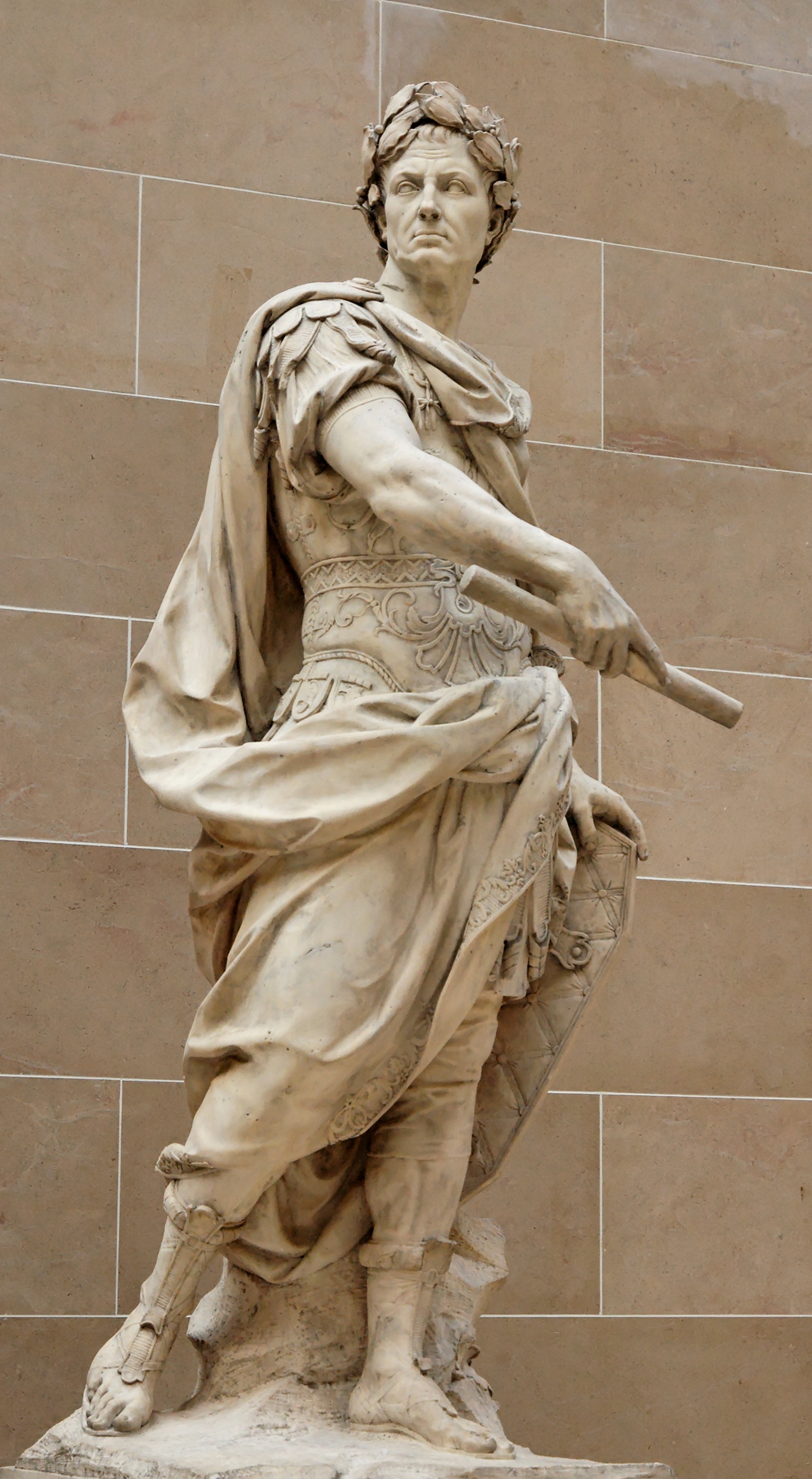
It was this day, in 46 BCE, that Julius Caesar lost almost a 1/3 of his men in combat to his former lieutenant Titus Labienus in the Battle of Ruspina. According to historians, Labienus controlled a significantly larger force than Caeser's, but by maintaining an extremely tight formation, Caesar misjudged his opponent and was lured in. It would be the last defeat Caesar had during the Roman Civil War that would end with him being named dictator.